上海歐贊自動化設備有限公司


人形機器人量產核心突破人形機器人量產核心突破:行星減速機自動化裝配的價值與挑戰 二維碼
79
發表時間:2025-09-17 09:06作者:上海歐贊自動化設備有限公司來源:上海歐贊自動化設備有限公司 人形機器人量產核心突破:行星減速機自動化裝配的價值與挑戰
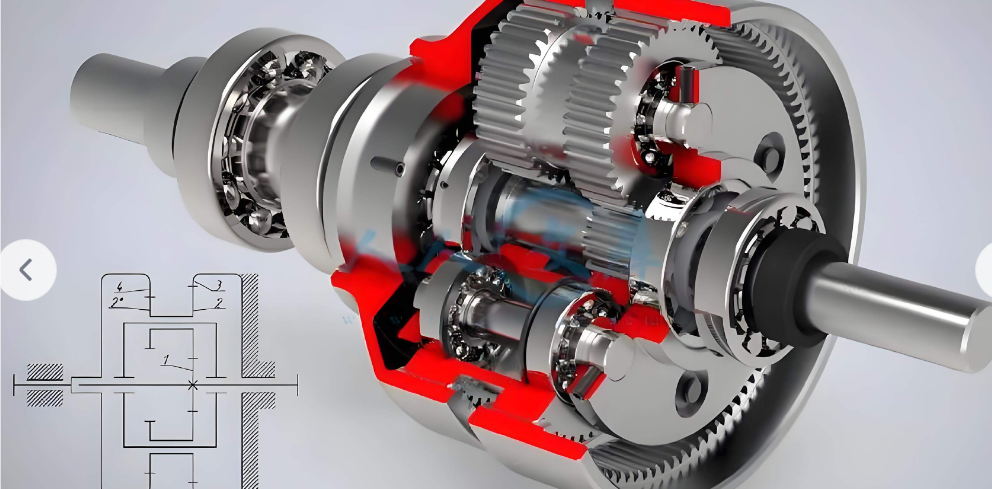
一、量產鴻溝的核心矛盾人形機器人從實驗室樣機到量產商品,需跨越精度一致性、效率產能、質量追溯三大核心挑戰。行星減速機作為關節動力中樞,其內部多級行星齒輪的背隙、 同心度、預緊力需達到微米級精度,傳統手工裝配模式在量產階段暴露出致命缺陷:
二、自動化裝配的三大躍遷路徑領先企業通過引入柔性化智能制造產線,推動行星減速機裝配從“手藝活”向標準化流程轉型,實現三大維度升級:
三、行業實踐與未來趨勢
四、上海歐贊自動化設備有限公司?解決方案價值合利士作為智能制造解決方案提供商,聚焦行星減速機等核心部件的自動化裝配需求,提供:
如需深入探討人形機器人關節裝配、汽車電機自動裝配線或柔性制造系統,歡迎訪問智能工廠自動化裝備定制專家,-上海歐贊自動化設備有限公司?,預約線下工廠參觀,獲取定制化解決方案。 結語:人形機器人的量產突破,本質是精密制造能力的**體現。每一顆齒輪的精準咬合、每一次壓裝的毫厘不差,都是通往未來的基石。在這條賽道上,先行者終將定義產業標準。 Core breakthrough in mass production of humanoid robots: value and challenges of automated assembly of planetary reducers
1、 The core contradiction of the mass production gap From laboratory prototypes to mass-produced products, humanoid robots need to overcome three core challenges: accuracy consistency, efficiency and production capacity, and quality traceability. As the joint power center, the planetary gearbox has multiple levels of backlash in its internal planetary gears Concentricity and pre tightening force need to achieve micrometer level accuracy, and traditional manual assembly mode exposes fatal defects in the mass production stage: Accuracy loss of control: uneven manual pressing force and visual inspection errors lead to fluctuations in batch performance, causing joint shaking, response delay, and even lifespan degradation; Efficiency bottleneck: The multiple processes of cleaning, pressing, locking, and testing heavily rely on skilled workers, resulting in long processing times for individual items and difficulty in supporting large-scale production; Quality black hole: Lack of assembly process data, difficulty in tracing faults, and inability to distinguish responsibility for design, incoming materials, or assembly processes. 2、 Three major transition paths for automated assembly Leading enterprises are promoting the transformation of planetary gearbox assembly from "craftsmanship" to standardized processes by introducing flexible intelligent manufacturing production lines, achieving upgrades in three major dimensions: Stable quality The high-precision servo press fit system achieves precise force control (error<0.1N · m), combined with visual guidance positioning (accuracy ± 0.01mm) and real-time force control feedback, to ensure consistent assembly parameters for each product; Online detection equipment such as laser interferometers and coordinate measuring instruments achieve 100% full inspection, with a back gap error controlled at 2-5 microns, far exceeding the industry average level. Efficiency leap The modular production line supports 24-hour continuous production with adjustable cycle time (such as completing one assembly every 30 seconds), increasing production capacity by 5-10 times compared to manual labor; The integrated process of automated feeding, pressing, locking, and testing reduces manual intervention, resulting in a cost reduction of over 30% per piece. Management transition The MES system collects over 20 parameters such as pressing force, torque, and position in real-time, generating a "one machine, one file" full lifecycle database; The intelligent warning system automatically intercepts out of tolerance parameters and combines big data analysis to quickly locate the root cause of faults (such as distinguishing design defects, incoming material defects, or assembly deviations). 3、 Industry Practice and Future Trends Benchmark case: Tesla Optimus production line adopts six axis robot+high-precision visual positioning, achieving planetary gear meshing accuracy of ± 0.005mm; Figure 01 optimizes assembly path through AI algorithm, increasing assembly efficiency by 40%; The Uber Walker series adopts a modular production line, with a mass production yield of 99.2%. Technological frontiers: Digital twin technology enables virtual simulation of assembly processes and anticipates interference risks in advance; 5G+industrial Internet supports remote parameter tuning and real-time monitoring; Artificial intelligence algorithms continuously optimize the pressing strategy and dynamically compensate for material creep and thermal deformation. Industrial significance: Automated assembly of planetary gearboxes is not only a key support for mass production of humanoid robots, but also a benchmark for the transformation of precision manufacturing from "experience driven" to "data-driven". The spillover effect of its technology will promote the intelligent upgrading of high-precision assembly scenarios such as automotive motors and aerospace.
4、 Solution Value of Shanghai Ouzan Automation Equipment Co., Ltd As a provider of intelligent manufacturing solutions, Hellise focuses on the automation assembly needs of core components such as planetary gearboxes and provides: Flexible production line design: supports mixed production of multiple product models and quick switching of assembly programs; Full process data traceability: MES system integrates production, quality inspection, and logistics data to achieve closed-loop quality management; Customized solution: Optimize the pressing strategy, testing standards, and production line layout according to customer process requirements.
If you need to delve deeper into the assembly of humanoid robot joints, automatic assembly lines for automotive motors, or flexible manufacturing systems, please visit Shanghai Ouzan Automation Equipment Co., Ltd., an expert in intelligent factory automation equipment customization, to schedule an offline factory visit and obtain customized solutions. Conclusion: The breakthrough in mass production of humanoid robots is essentially the ultimate embodiment of precision manufacturing capabilities. The precise meshing of every gear and the precision of every press fit are the cornerstones leading to the future. On this track, pioneers will eventually define industry standards. The intelligence of precision assembly of small parts essentially transforms "human intuition" into "digital algorithms" and maps the "physical world" to the "digital space". This change not only improves efficiency, but also redefines the core competitiveness of the manufacturing industry - from "cost control" to "value creation". In the next decade, the ability to master the fusion technology of "precision+intelligence" will become a key watershed for enterprises to overcome the "medium technology trap". |